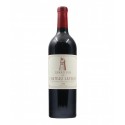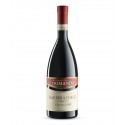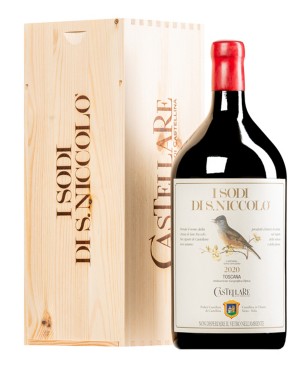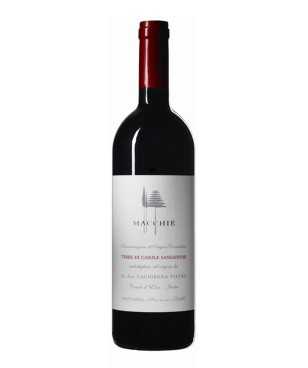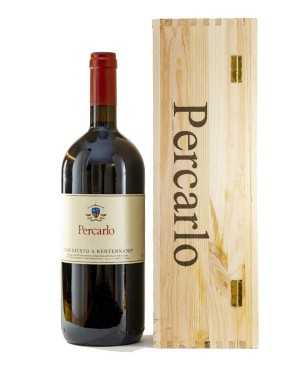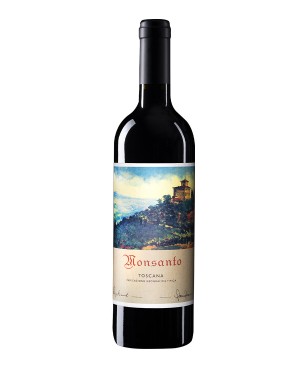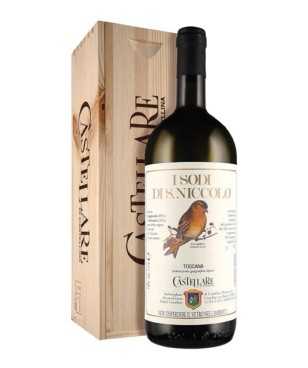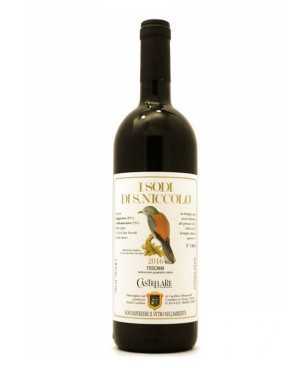
Castellare I Sodi di S. Niccolo 2022 IGT Toscana Jeroboam
| Tipologia | Rosso fermo |
| Anno: | 2022 |
| Classificazione: | IGT Toscana |
| Regione: | Toscana |
| Vitigni: |
Sangiovese 90%, Malvasia Nera 10%
|
| Alcol: | 13,5% in volume |
| Formato: | 3L Jeroboam |
Sangiovese is one of the most important and representative red grape varieties in Italian viticulture. Particularly associated with Tuscany and Romagna, it has a remarkable ability to express different terroirs, producing wines ranging from fresh and approachable styles to bottles of great structure, complexity and ageing potential.
In this category you will find a selection of Sangiovese wines from different producers, territories and appellations, characterised by freshness, elegance, distinctive tannins and an aromatic profile capable of developing considerable complexity with age.
From Chianti Classico and Brunello di Montalcino to Vino Nobile di Montepulciano and Sangiovese di Romagna, this grape is at the heart of some of Italy's best-known wines and represents one of the finest examples of the relationship between grape variety, terroir and winemaking tradition.
Sangiovese can take on remarkably different characteristics depending on terroir and winemaking style, although several distinctive features are commonly found. Typical aromas include cherry, sour cherry and other red fruits, often accompanied by floral, herbal and spicy notes.
On the palate, Sangiovese is generally characterised by good acidity and noticeable tannins, qualities that contribute to its strong affinity with food and, in its finest expressions, its ability to develop over many years.
With ageing, particularly in more structured wines, the aromatic profile can become progressively more complex, developing nuances of spices, tobacco, leather, forest floor and aromatic herbs.
Tuscany is the region most closely associated with Sangiovese and is home to some of Italy's most prestigious wine appellations. Differences in soil, altitude, vineyard exposure and climate contribute to remarkably diverse expressions from one area to another.
In Chianti and Chianti Classico, Sangiovese forms the backbone of the wines, with freshness, fruit, tannins and elegance playing a central role. Their characteristics vary further according to the individual growing area and the choices of each producer.
In Montalcino, Sangiovese, locally known as Sangiovese Grosso, is used to produce Brunello di Montalcino, while in Montepulciano, where it is traditionally called Prugnolo Gentile, it is the principal grape variety of Vino Nobile di Montepulciano.
Brunello di Montalcino is one of the most prestigious and age-worthy expressions of Sangiovese. Structure, acidity and tannins allow the finest bottles to undergo long periods of maturation and develop remarkable complexity over time.
Chianti Classico offers numerous interpretations of the grape, from wines characterised by freshness and immediate appeal to deeper and more structured selections and reserve wines. Vino Nobile di Montepulciano is another historic expression of Tuscan Sangiovese.
Beyond these major appellations, Sangiovese is used in numerous other Tuscan wines, both as a varietal wine and in blends, demonstrating a remarkable ability to adapt to different terroirs and winemaking philosophies.
Romagna also has a long tradition of Sangiovese cultivation. Its different hillside and foothill areas allow the grape to develop distinctive profiles, producing wines that can emphasise freshness and fragrance or offer greater structure and complexity.
Sangiovese di Romagna therefore represents another important Italian interpretation of the variety and provides an opportunity to appreciate how the grape can express characteristics distinct from its better-known Tuscan counterparts.
Freshness, tannins and structure make Sangiovese particularly versatile at the table. Younger wines pair well with pasta served with meat sauces, cured meats, pizza, grilled meats and medium-aged cheeses.
More structured and mature expressions are ideal with roasts, braised meats, game, Bistecca alla Fiorentina and mature cheeses. More complex wines can also pair beautifully with mushroom and truffle dishes.
Our selection includes Sangiovese wines from different producers, territories, appellations and vintages, with bottles chosen to showcase the diversity of one of the most important grape varieties in Italian winemaking.
Our aim is to offer a choice suitable both for those looking for versatile red wines deeply rooted in Italian tradition and for enthusiasts interested in prestigious appellations and more complex, age-worthy expressions of Sangiovese.
Sangiovese generally produces red wines characterised by good acidity, noticeable tannins and aromas of cherry, sour cherry, flowers and herbs. Structure and complexity can vary considerably depending on terroir and ageing.
Sangiovese is used to produce numerous Italian wines, including Chianti, Chianti Classico, Brunello di Montalcino and Vino Nobile di Montepulciano. It also plays a central role in many wines from Romagna and other parts of central Italy.
Brunello di Montalcino is a wine made exclusively from Sangiovese, locally known as Sangiovese Grosso. Sangiovese is therefore the grape variety, while Brunello di Montalcino is a specific appellation and the wine produced according to its regulations.
Sangiovese pairs well with pasta served with meat sauces, cured meats, grilled meats and cheeses. More structured and mature expressions are particularly suited to roasts, braised meats, game, Bistecca alla Fiorentina and mature cheeses.
| Tipologia | Rosso fermo |
| Anno: | 2022 |
| Classificazione: | IGT Toscana |
| Regione: | Toscana |
| Vitigni: |
Sangiovese 90%, Malvasia Nera 10%
|
| Alcol: | 13,5% in volume |
| Formato: | 3L Jeroboam |
|
Tipologia |
Rosso |
|
Classificazione: |
DOCG Chianti Classico |
|
Regione: |
Toscana |
|
Vitigni: |
Sangiovese 100%
|
|
Alcol: |
13,50% in volume |
|
Formato: |
0,75 l Standard |
|
Tipologia |
Rosso |
|
Anno: |
2007 |
|
Classificazione: |
IGT Sangiovese |
|
Regione: |
Toscana |
|
Vitigni: |
100% Sangiovese |
|
Alcol: |
14,00% in volume |
|
Formato: |
0,75 l Standard |
Contiene solfiti - Contains sulfites
|
Tipologia |
Rosso |
|
Anno: |
2001 |
|
Classificazione: |
IGT Sangiovese |
|
Regione: |
Toscana |
|
Vitigni: |
100% Sangiovese |
|
Alcol: |
14,00% in volume |
|
Formato: |
0,75 l Standard |
Contiene Solfiti - Contains Sulfites
|
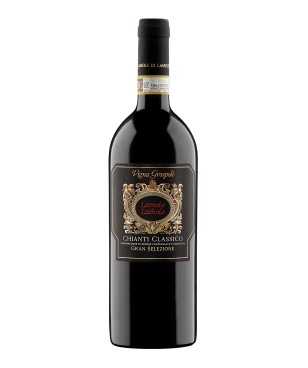
Tipologia |
Rosso |
|
Classificazione: |
IGT Toscana |
|
Regione: |
Toscana |
|
Vitigni: |
100% Sangiovese |
|
Alcol: |
13,50% in volume |
|
Formato: |
0,75 l Standard |
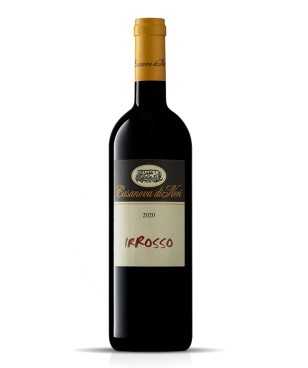
| Tipologia | Rosso fermo |
| Anno; | 2022 |
| Classificazione: | IGT Toscana |
| Regione: | Toscana |
| Vitigni: | 100% Sangiovese |
| Alcol: | 13,50% in volume |
| Formato: | 0,75 l Standard |
Contiene solfiti - Contains sulfites
|
Tipologia |
Rosso |
|
Classificazione: |
IGT Toscana |
|
Regione: |
Toscana |
|
Vitigni: |
100% Sangiovese |
|
Alcol: |
13,50% in volume |
|
Formato: |
0,75 l Standard |
Contiene solfiti - Contains sulfites
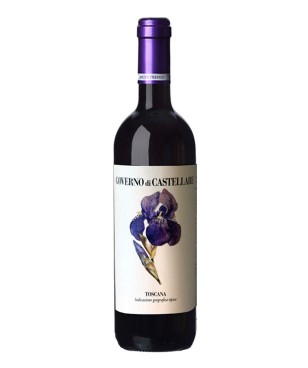
| Tipologia | Rosso |
| Anno: | 2022 |
| Classificazione: | Toscana IGT |
| Regione: | Toscana |
| Vitigni: | sangiovese 100% |
| Alcol: | 14,50% in volume |
| Formato: | 0,75 l Standard |
| Tipologia | Rosso fermo | |
| Anno: | 2016 | |
| Classificazione: | Terre di Casole Sangiovese D.O.C. | |
| Regione: | Toscana | |
| Vitigni: | 100% Sangiovese | |
| Alcol: | 14,00% in volume | |
| Formato: | 0,75 l Standard |
Contiene solfiti - Contains sulfites
| Tipologia | Rosso fermo |
| Classificazione: | IGT Toscana |
| Regione: | Toscana |
| Vitigni: | 100% Sangiovese |
| Alcol: | 14,50% in volume |
| Formato: | 1,5 L |
Contiene Solfiti - Contains Sulfites
|
Tipologia |
Rosso |
|
Anno: |
2021 |
|
Classificazione: |
IGP Toscana Rosso |
|
Regione: |
Toscana |
|
Vitigni: |
100%Sangiovese |
|
Alcol: |
14,50% in volume |
|
Formato: |
0,75 l Standard |
Contiene solfiti - Contains sulfites
| Tipologia | Rosso fermo |
| Anno: | 2022 |
| Classificazione: | IGT Toscana |
| Regione: | Toscana |
| Vitigni: |
Sangiovese 90%, Malvasia Nera 10%
|
| Alcol: | 13,5% in volume |
| Formato: | 1,5 l Magnum |
|
Tipologia |
Rosso |
|
Classificazione: |
IGT Toscana |
|
Regione: |
Toscana |
|
Vitigni: |
90% Sangiovese |
|
Alcol: |
14,00% in volume |
|
Formato: |
0,75 l Standard |
Contiene Solfiti - Contains Sulfites
|
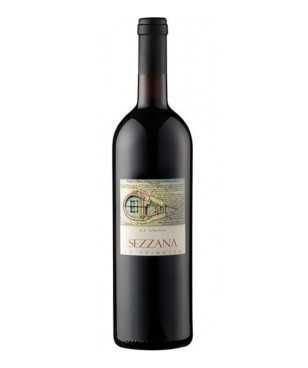
Tipologia |
Rosso |
|
Anno: |
2008 |
|
Classificazione: |
IGT Sangiovese |
|
Regione: |
Toscana |
|
Vitigni: |
100% Sangiovese |
|
Alcol: |
14,00% in volume |
|
Formato: |
0,75 l Standard |
Contiene solfiti - Contains sulfites
|
|||||||||||||
|
|||||||||||||||
| Contiene solfiti - Contains sulfites |
| Tipologia | Rosso fermo |
| Classificazione: | Romagna |
| Regione: | Emilia Romagna |
| Vitigni: | 100%Sangiovese |
| Alcol: | 13,00% in volume |
| Formato: | 0,75 l Standard |
Contiene solfiti - Contains sulfites
| Tipologia | Rosso fermo |
| Classificazione: | Toscana IGT |
| Regione: | Toscana |
| Vitigni: | 100% Sangiovese |
| Alcol: | 14,00% in volume |
| Formato: | 0,75 l Standard |
|
Tipologia |
Rosso |
|
Classificazione: |
IGT Toscana |
|
Regione: |
Toscana |
|
Vitigni: |
100% Sangiovese |
|
Alcol: |
13,50% in volume |
|
Formato: |
0,75 l Standard |
Contiene Solfiti - Contains Sulfites
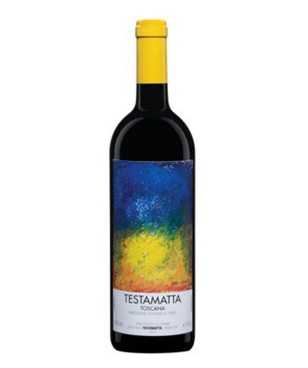
| Tipologia | Rosso fermo |
| Anno: | 2024 |
| Classificazione: | Rosso di Montepulciano DOC |
| Regione: | Toscana |
| Vitigni: | 5% Canaiolo Nero 5% Colorino 5% Merlot 85% Prugnolo Gentile (Sangiovese Grosso) |
| Alcol: | 14,00% in volume |
| Formato: | 0,75 l Standard |
| Tipologia | Rosso fermo |
| Anno: | 2022 |
| Classificazione: | IGT Toscana |
| Regione: | Toscana |
| Vitigni: |
sangiovese 85%, malvasia nera 15%
|
| Alcol: | 14,5% in volume |
| Formato: | 0,75 l Standard |
Contiene solfiti - Contains sulfites
|
Tipologia |
Rosso |
|
Anno: |
2023 |
|
Classificazione: |
Toscana IGT |
|
Regione: |
Toscana |
|
Vitigni: |
100% Sangiovese |
|
Alcol: |
13,50% in volume |
|
Formato: |
0,75 l Standard |
Contiene Solfiti - Contains Sulfites
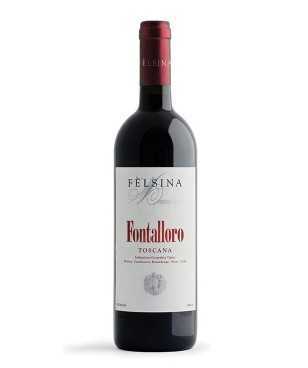
|
Contiene Solfiti - Contains Sulfites